Migrating Legacy Contracts Into a New CLM System
Moving contracts into a new system only works if you migrate the legacy data first.

A legal team gets a question on a Tuesday afternoon: when does the regional distribution agreement renew, and what happens to pricing if it does? The answer should take a minute. Instead it takes an afternoon, because the master agreement lives in a shared drive, the amendment lives in someone's inbox, and the signed renewal notice, if it exists at all, might be in a filing cabinet two floors down. It is a live operational risk sitting inside the business's active relationships, not a filing problem, and it exists in some form at almost every organization still running contracts through filing cabinets, email threads, shared drives, and disconnected software. The consequences appear as missed renewals, auto-renewal clauses that nobody was watching, price-adjustment provisions that trigger without warning, and exclusivity terms that quietly rule out deals the business thought it was free to pursue.
Legacy systems make this worse by forcing legal teams to extract even the most basic facts, a renewal date, a counterparty name, a payment term, through line-by-line manual reading. None of this is really about age. A five-year-old contract causes no trouble if its terms are tracked and visible. The trouble comes from fragmentation, and fragmentation gets worse, not better, the longer it goes unaddressed.
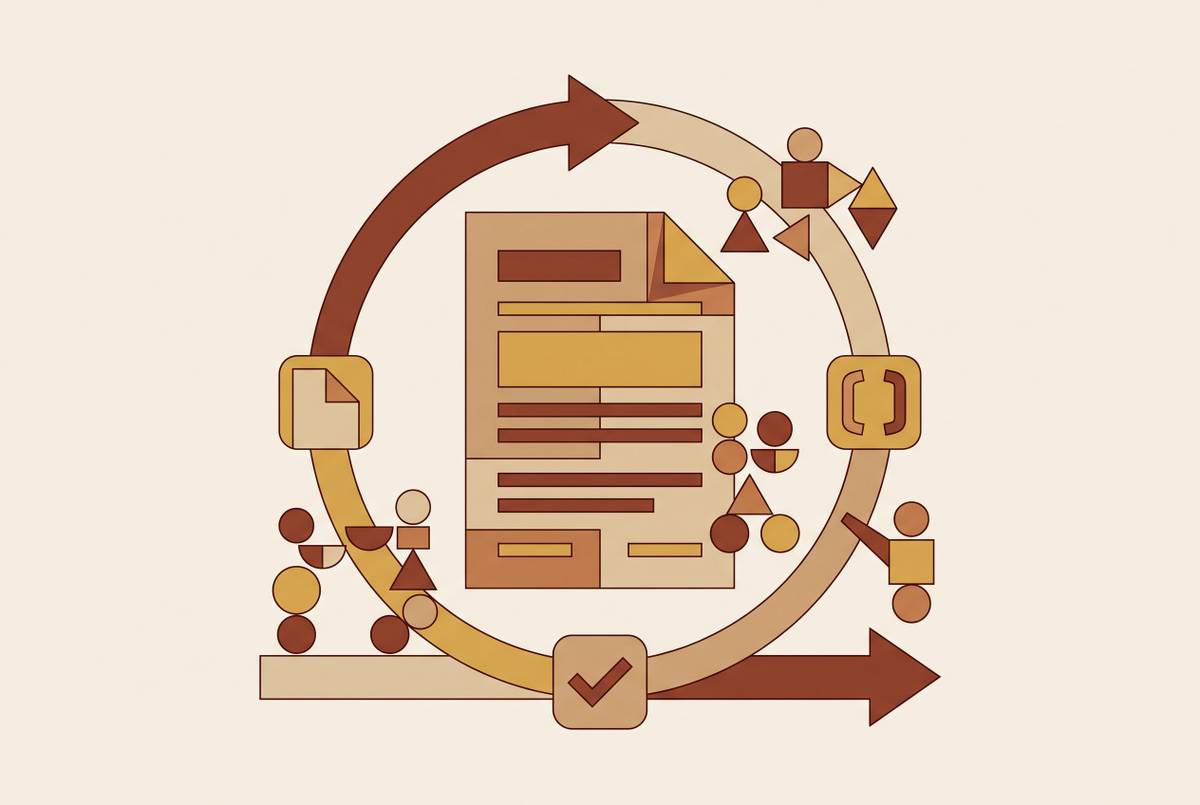
It also puts a ceiling on what a new CLM platform can actually do. A system that only holds contracts signed after go-live is a new island in the same archipelago of silos the organization was trying to escape, not a single source of truth. Every feature a modern CLM promises, analytics, AI-driven obligation monitoring, renewal automation, depends on the completeness of the underlying data, and a partial migration produces partial intelligence no matter how capable the platform is. Migrating legacy contracts is not an optional add-on to a CLM rollout; it is the precondition for the CLM to work. What follows is a framework for carrying that migration out as an operational continuity project, one that protects the business relationships the contracts govern while the data moves.
What a full contract audit uncovers before migration begins
Migration does not start with configuration or data loading. It starts with finding out what actually exists, where it lives, and what will happen to the business if it moves carelessly. Every contract needs to be catalogued by type (NDAs, vendor agreements, customer contracts, employment agreements), by current status (active, expired, archived), and by storage location, because legacy contracts are rarely sitting in one place waiting to be counted. The inventory has to cover the CLM already in use, shared network drives, email archives, personal devices, file-sharing platforms with no contract-specific functionality built in, and physical files that were never digitized.
The audit also has to capture the metadata fields the legal team actually relies on day to day, contract value, renewal date, counterparty, and whatever custom fields support existing workflows, so the new platform gets configured to carry those fields forward rather than defaulting to whatever the vendor ships out of the box. Along the way, the audit will surface governance questions that have no clean technical answer: what to do with a master agreement when an active statement of work is still running under a master that has technically expired; how to assign one consistent counterparty name when the same entity shows up under several historical names because of a merger or reorganization; how to represent the status of a contract family when the parent record and the child documents disagree with each other. These are not IT questions. They require legal and operational judgment, and they need to be settled before a single record moves.
The audit doubles as the first real health check the contract portfolio has had in years, and it typically reveals problems nobody knew existed: signed agreements that cannot be located at all, old templates carrying legal or commercial terms nobody would approve today, auto-renewal obligations with no one assigned to track them, pricing mechanisms that no longer match current business terms, and contract families with contradictory status records. Larger enterprises with contracts scattered across business units and geographies need something closer to a coordinated sweep, hitting every storage location at roughly the same time, before any consolidation work begins.
Data cleanup as a strategic decision, not a housekeeping step
The audit tells the organization what it has. Cleaning that data up is where most migrations either earn their keep or quietly fail, and it is the step most often compressed to protect a deadline. Moving inaccurate, duplicated, or incomplete records into a new platform does not solve the underlying data quality problem. It just produces a more expensive, better-looking version of the same unreliable dataset, now running on a system the organization is paying a vendor for.
The remediation work itself is specific. For a large enterprise, this phase is frequently where most of the calendar time in the entire migration goes, and shortening it to hit a launch date is one of the most common reasons a migration finishes on schedule but leaves the legal team with a system it cannot trust.
Field dependencies make the stakes concrete. Reports built on dirty data will keep producing misleading numbers long after the migration is technically complete, because nothing about a finished migration corrects bad inputs after the fact.
The decision about which version of a contract is governing deserves its own attention, because it is a legal determination, not a data preference someone can make by default. When a contract exists as a signed PDF, an amended Word document, and a countersigned scan, someone with actual authority has to designate the binding record before that contract enters the new system. Handing that decision to a data migration team without legal sign-off is a governance failure, and it creates gaps in the audit trail and real questions about enforceability later. The order matters here: clean the data first, then move it, not the other way around.
Setting objectives for the new platform before configuring anything
Before anyone touches the new platform's configuration screens, the organization needs a clear answer to a different question: what is this system supposed to do that the old one couldn't? Skipping that step is how teams end up migrating their own inefficiencies into a brand-new interface, recreating the same approval delays and blind spots they were trying to leave behind, just with a different login screen.
The team should go through the current system and name, specifically, what is broken: the pain points, the bottlenecks, the functionality that was always missing. The output of that work should be a concrete list, not a vision statement. It should name the approval bottlenecks to eliminate. It should name the integrations the old system never had, CRM, finance, HRIS. And it should set measurable success criteria the new platform will actually be judged against once it's live. That list becomes the basis for every configuration decision that follows, and it is the check against simply accepting whatever default settings the new vendor's platform ships with.
This step also forces a conversation that is easy to avoid until it's too late. Legal, sales, procurement, and HR frequently want different, sometimes conflicting, things from a CLM, and surfacing those differences before go-live is the purpose of setting objectives. Field structures, approval workflows, metadata schemas, these are expensive to reverse once contracts are already flowing through the system, so the alignment has to happen on paper first, not discovered live after the fact.
Choosing a migration strategy based on operational risk, not vendor convenience
The right way to migrate is determined by how much disruption the business can absorb if something goes wrong mid-transition, not by how fast the vendor wants to close the implementation. But doing it without specific safeguards leaves the migration exposed to data gaps, extraction errors, and real interruptions to active contracting work while the transition is underway.
Organizations that pull off a platform switch successfully do not necessarily avoid rip and replace. They de-risk it, through careful sequencing, thorough preparation, and validation built into every stage before the final cutover happens. A phased approach moves contract types and business units in smaller groups, allowing for continuous testing along the way and keeping any single error contained to one category or department. The practical sequencing logic starts with lower-risk, lower-volume material, expired archives, standard NDAs, to build confidence in the process before moving on to high-value agreements still under active negotiation.
In-flight contracts need an explicit decision before migration touches them. For a contract genuinely mid-negotiation, the organization should either finish the current round in the legacy system before migrating it, or migrate it early with the counterparty-facing team fully briefed on what changed. Ambiguity there is where audit trails fracture.
AI-accelerated metadata extraction during migration, with human validation
AI's role in a migration is specific and bounded: it pulls structured data out of unstructured legacy documents, at volume, far faster than a team of people reading contracts line by line. But how much to trust that extraction depends on the document itself. A handwritten amendment or a heavily negotiated bespoke contract introduces variability, which is what confidence scoring exists to flag.
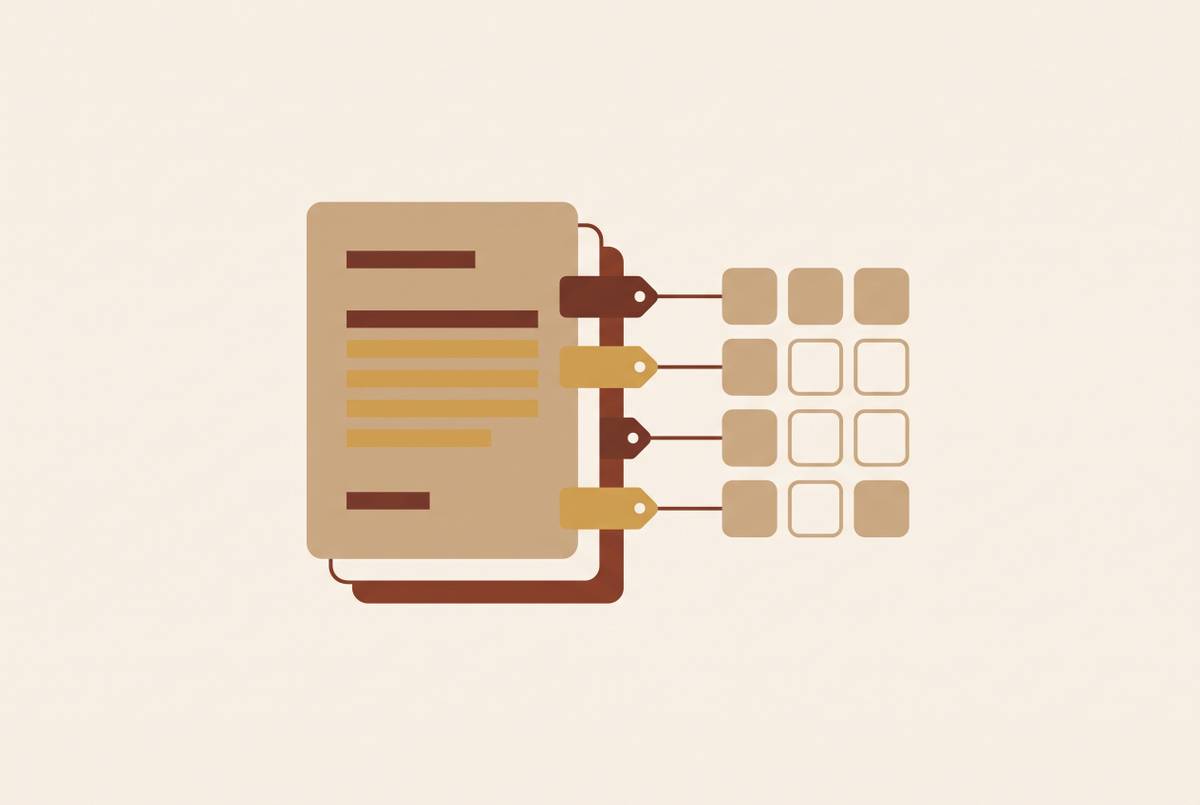
AI extracts each field and scores its own confidence in the result; high-confidence fields move forward; flagged fields get routed to a human reviewer for verification. That's targeted review, not a full manual re-read of every document in the repository. Certain fields warrant human eyes no matter how confident the AI's extraction is, governing law, indemnification limits, liability caps, auto-renewal terms, termination for convenience clauses, because getting one of those wrong creates direct legal and financial exposure. This is the kind of work Docusign's Iris AI is built to do within the IAM platform, extracting key data points during migration and flagging the fields that need a second set of eyes, while storing the resulting repository in a form that's actually searchable and accessible to the people who need it.
The value of this doesn't stop once the migration is done. A complete historical record lets an organization measure actual negotiation cycle times, spot patterns in how deals get negotiated, and benchmark future performance against a baseline that means something, none of which is possible against a partial or dirty repository. This is the return on the cleanup work from earlier: every obligation that gets surfaced automatically, instead of discovered after a deadline has already passed, is a direct dividend of having done the data work properly the first time.
Validating the migrated repository before decommissioning the legacy system
Validation is its own phase, with its own pass or fail criteria, not a spot check tacked onto the end of the project. The legacy system needs to stay live and accessible until those criteria are actually met. Automated reconciliation, comparing document counts, field completeness rates, and metadata values between the old system and the new one, can cover far more volume than manual review ever could, but it only works if the old system's data is still queryable. That's one more reason decommissioning early is a mistake.
The criteria for passing validation should be defined back during the objectives step, not improvised once validation is already underway. It is whether the organization can manage its obligations reliably from the new system.
User acceptance testing is a separate step, and it catches a different kind of gap. After cutover, a defined stabilization period keeps the old system readable, though not writable, as a reference point, routes all new contracts into the new system only, and gives the organization a dedicated point of contact for migration issues as they turn up in daily use. A fully validated, complete repository is what makes everything that comes next possible.
What a completed migration makes possible inside a unified CLM platform
The point of all this work was never a cleaner archive. A complete, clean, structured contract repository is what lets a CLM function as a system of intelligence. None of that analysis means anything run against a partial dataset. Automated metadata tagging turns on alerts for critical dates, improves communication across departments, and takes legal out of the loop on routine reviews, freeing that capacity for work that actually needs legal judgment.
Integrations start paying off too, once the repository behind them is complete. Finance can pull a renewal schedule directly. This is the environment Docusign's IAM platform is built around: Agreement Manager, Iris AI, CLM, Workflow Builder, and Web Forms operating together, with integrations across more than 1,100 third-party applications, so that a completed migration compounds over time. Every obligation gets monitored, every renewal gets surfaced, and every workflow runs from one source of truth.
Organizations that treat migration as a design exercise, not just a data-loading task, end up with something genuinely different from what they started with: a contract portfolio that actively informs decisions instead of sitting dormant until someone needs to dig up a document. The real measure of success is that the business can now answer, in seconds, questions it used to spend afternoons chasing: what's due this quarter, which renewals need a decision, where the exposure is concentrated, and what the data says about contracting faster next time.